Concrete Slab Thickness Requirements in Dallas: Residential vs. Commercial Standards
Decision Snapshot: Concrete slab thickness in Dallas must be determined by load requirements, soil conditions, and long-term use rather than standard assumptions like “four inches is enough.” Matching thickness with proper reinforcement and base preparation is essential to prevent structural failure and ensure long-lasting performance.
How thick does a concrete slab actually need to be in Dallas?
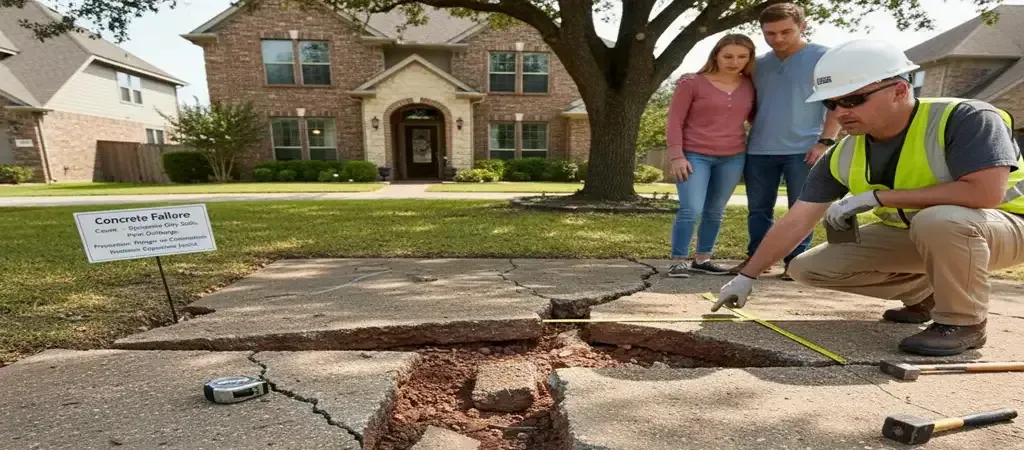
It is a simple question that causes more structural failures than almost any other decision in concrete construction. Homeowners often hear that four inches is “standard,” while commercial developers are told that thicker always means safer. Both assumptions are wrong more often than they are right.
Understanding the real difference between residential and commercial thickness standards that concrete slab installation services in Dallas follow is the only way to avoid mistakes before any concrete is placed.

Why Slab Thickness Is a Structural Decision
Concrete slab thickness is not a cosmetic choice. It is one of the most important structural decisions in any project, whether residential or commercial. Our concrete experts note that in Dallas, slab thickness determines how well the concrete resists cracking, carries load, and survives long-term soil movement.
We have seen that most slab failures are not caused by poor finishing or surface wear.
They are caused by slabs that were simply too thin for the loads they were expected to carry. Once a slab is poured, thickness cannot be corrected. That makes this decision permanent.
Residential and commercial slabs serve very different purposes. Treating them the same is one of the most common and costly mistakes in concrete construction.
Sometimes, mistakes happen when the wrong contractor is hired. Review mistakes to avoid when hiring a concrete contractor to protect your project and make informed decisions.
Typical Residential Slab Thickness in Dallas
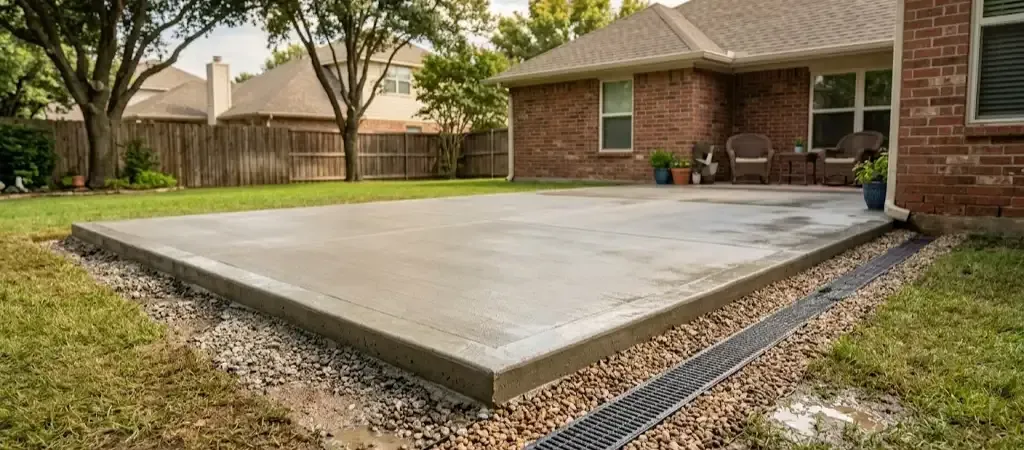
For most residential applications in Dallas, a four-inch slab is considered the practical minimum. This applies to patios, sidewalks, and light-use driveways when proper base preparation and reinforcement are used.
However, four inches is not a universal solution. Driveways that support heavier vehicles, extended parking, or delivery traffic often require five inches to reduce flexing and cracking. Garage slabs that support storage, tool chests, and vehicle loads also benefit from increased thickness.
Based on experience, the biggest residential mistake is assuming that reinforcement can compensate for insufficient thickness. Reinforcement controls cracking. It does not replace structural depth. Thin slabs crack less predictably and deteriorate faster under repeated loading.
The American Concrete Institute provides residential slab-on-ground guidelines that outline how thickness and reinforcement work together to control cracking and deflection.
Commercial Slabs Require Structural Engineering
Commercial slab thickness is governed by load, not convenience. Warehouses, retail spaces, manufacturing floors, and parking structures place far greater demands on concrete than any residential surface.
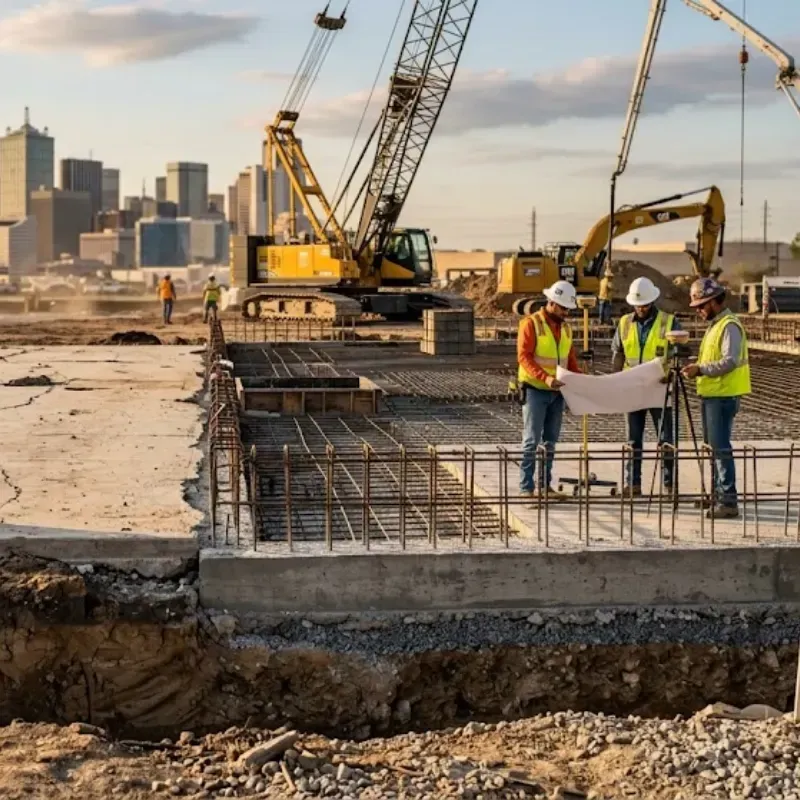
In Dallas, commercial slabs typically range from six inches to twelve inches or more, depending on forklift traffic, rack loads, and point loading from equipment. Some industrial slabs exceed twelve inches with double mat reinforcement or post-tensioned systems.
The key difference is that commercial slabs are almost always engineered. Residential slabs often follow standard practice. Commercial slabs require load calculations, soil reports, and structural design.
According to the American Society of Civil Engineers (ASCE), practical design of slabs on grade involves decisions about slab thickness, reinforcement, and load-bearing characteristics depending on use and site conditions.
How Dallas Soil Conditions Change the Rules
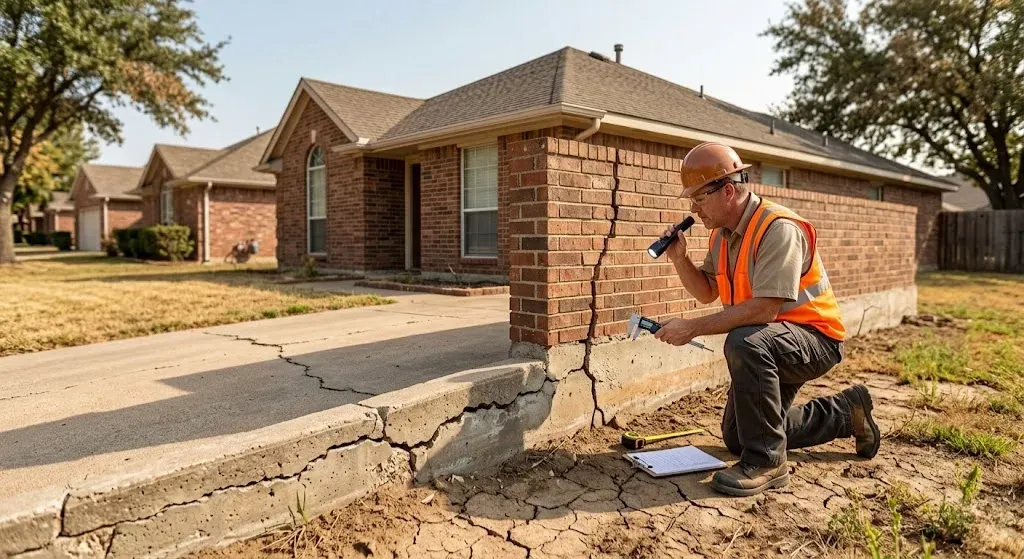
Dallas sits on expansive clay soils that shrink and swell with moisture changes. This soil movement places constant stress on slabs of any thickness.
In our work, we have seen thin slabs perform well on stable soils and thick slabs fail on poorly prepared subgrades. Thickness helps, but soil preparation and base design matter just as much.

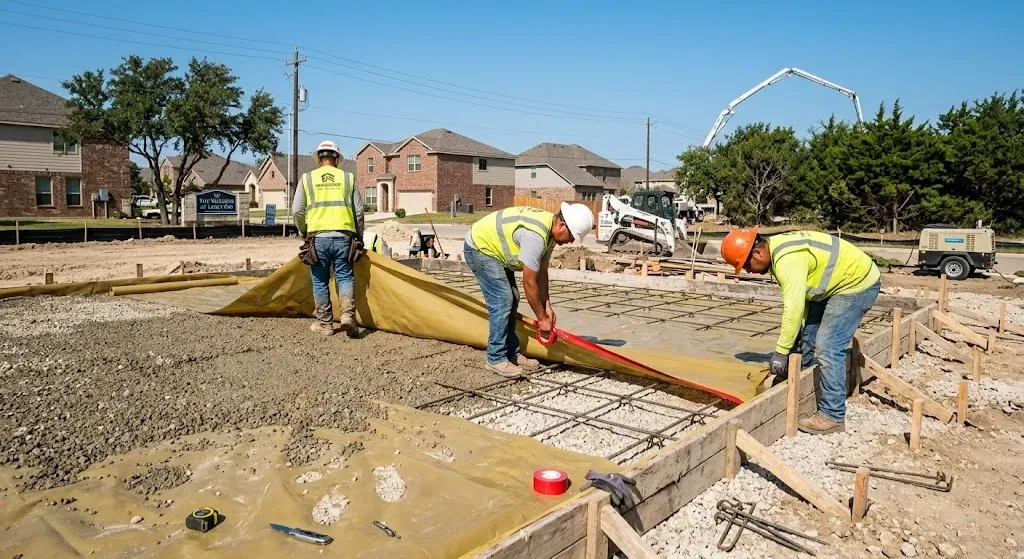
For both residential and commercial slabs, proper subgrade compaction and a stable crushed limestone base are essential. Without them, increasing thickness only delays cracking rather than preventing it.
That’s why proper site preparation is crucial. Review site preparation for concrete construction to help ensure a durable, long-lasting slab.
The Role of Reinforcement in Thickness Decisions
Reinforcement does not replace thickness. It complements it.
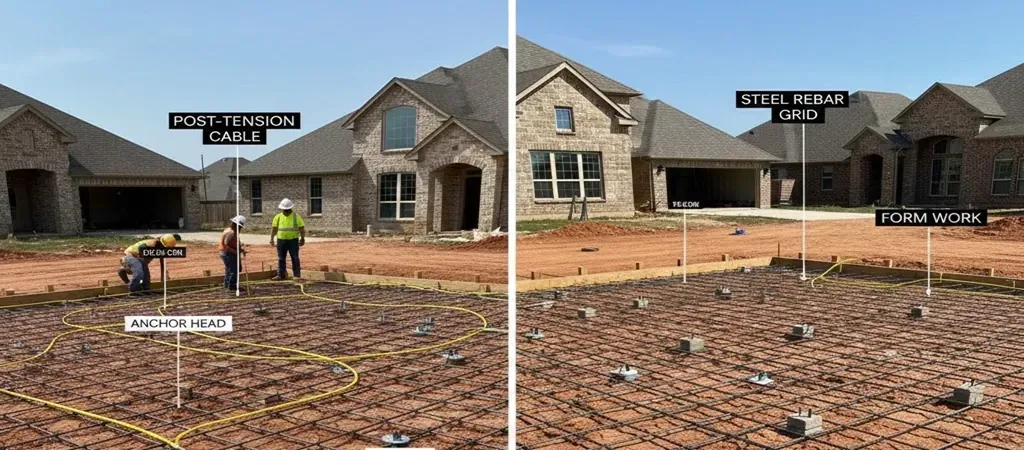
Steel rebar, wire mesh, and fiber reinforcement help control crack width and distribute loads. They do not prevent slabs from bending under load. Structural capacity comes from thickness and base support.
A common mistake we see in residential projects is using heavy reinforcement in a thin slab to save material costs. This usually results in more frequent cracking and joint failure.
In commercial work, reinforcement design is directly tied to thickness. Thinner slabs require heavier reinforcement. Thicker slabs can reduce reinforcement density but increase material volume. This tradeoff is always evaluated by engineers, not by rule of thumb.
Control Joints and Thickness Work Together
Slab thickness and joint spacing are directly related. Thinner slabs require closer joint spacing to control cracking. Thicker slabs allow wider joint spacing without increasing crack risk.
In our experience, many slab failures are blamed on concrete quality when the real issue is joint layout that does not match slab thickness. Cracks form where joints should have been placed.
The Portland Cement Association explains how slab design elements such as slab thickness influence joint spacing and long-term crack control in concrete slabs.
Common Mistakes in Residential Slab Thickness
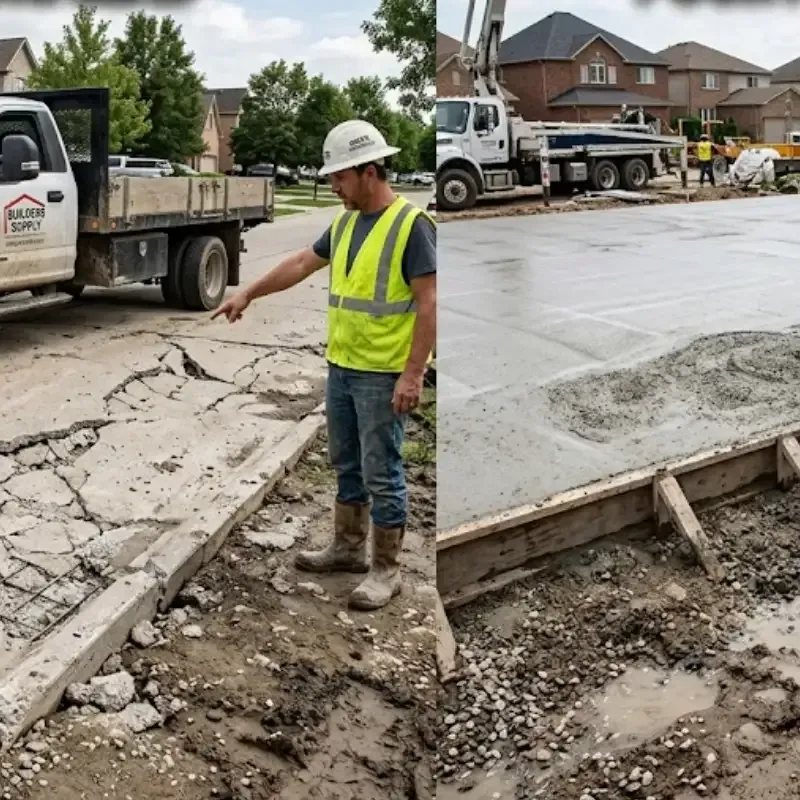
The most common residential error is pouring four inches everywhere without evaluating load conditions. Driveways that support delivery trucks, trash vehicles, or recreational vehicles often fail prematurely at four inches.
Another mistake is assuming thicker is always better. Excessive thickness without proper base preparation leads to unnecessary cost without improving performance.
Homeowners are often advised to increase thickness without addressing drainage, compaction, or reinforcement. In Dallas soil, those factors are just as important as depth.
Common Mistakes in Commercial Slab Design
The most frequent commercial mistake is underestimating future loads. Buildings often change use over time. Slabs designed for light retail may later support warehouses, racking systems, or heavy equipment.
Once poured, slab thickness cannot be increased. Designing only for current use often leads to costly overlays or structural retrofits later.
Another error is treating slab thickness as a cost-saving variable late in the design process. Reducing thickness without redesigning reinforcement and joints almost always creates long-term performance problems.
Why Residential and Commercial Standards Must Differ
Residential slabs support distributed loads from people and vehicles. Commercial slabs support concentrated loads from equipment, racking, and forklifts.
Residential slabs tolerate some cracking without structural consequence. Commercial slabs must control deflection, flatness, and load transfer to protect operations and equipment.
This is why residential rules of thumb do not apply to commercial construction.
Final Takeaway
Slab thickness is not a preference. It is a structural requirement based on load, soil, and use.
In Dallas, four inches is a starting point for light residential work, not a universal solution. Commercial slabs require engineered thickness based on actual loading conditions.
The next step in any project is not choosing a number.
It is evaluating soil, load, and long-term use before thickness is decided. That single decision determines whether a slab performs for decades or fails within years.