Post-Tension vs. Rebar Reinforced Slabs: Which Is Better for Dallas Homes?
Decision Snapshot:
Post-tension slabs generally outperform rebar-reinforced slabs in Dallas due to their ability to actively resist movement from expansive clay soils. While both systems have valid uses, post-tensioning provides better long-term control of cracking and structural stress under repeated seasonal soil shifts.
If expansive clay soil is a known constant in Dallas, why are so many slabs still designed as if movement were optional? And when cracks eventually appear, is the failure in the concrete itself or in the reinforcement philosophy chosen at the start? These questions matter because North Texas soil does not test slabs once. It tests them every season. Builders often hear that post-tension and rebar systems are functionally equivalent when engineered correctly, but field performance in Dallas tells a different story.
Based on our experience providing concrete slab services in Dallas for both residential and commercial projects across the Metroplex, the distinction between these systems isn’t determined by strength on pour day. It is about how each slab manages tensile stress after years of moisture cycling, shrink-swell behavior, and differential loading have already done their work.
Why Dallas Soil Changes the Equation
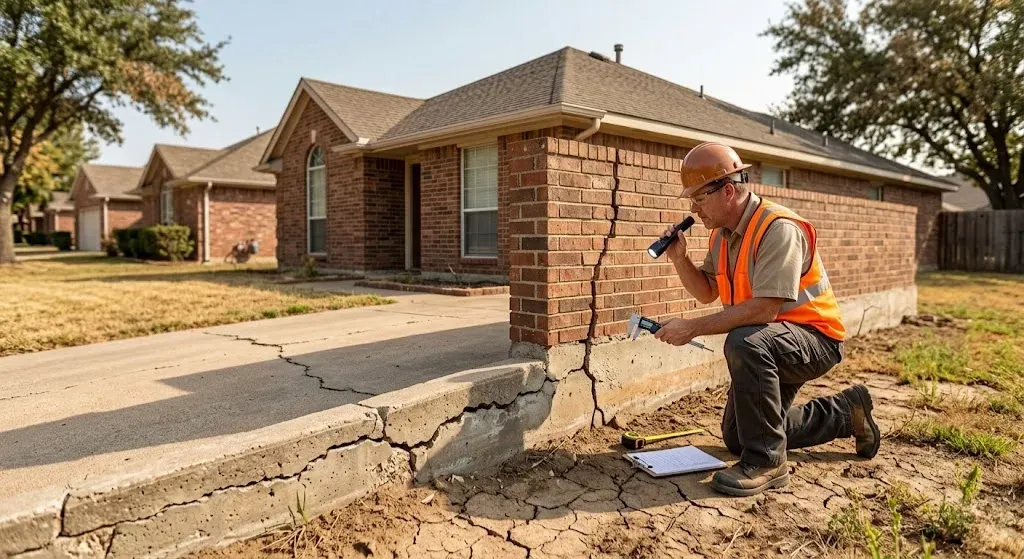
Dallas sits on expansive clay soil, commonly referred to as black gumbo. This soil expands when wet and contracts during dry periods. According to our concrete slab specialists, seasonal moisture changes can cause soil movement of several inches.
This matters because concrete is strong under compression but weak under tension. When soil shifts unevenly, slabs are forced to flex. How reinforcement handles that flex determines whether cracks remain cosmetic or become structural issues.
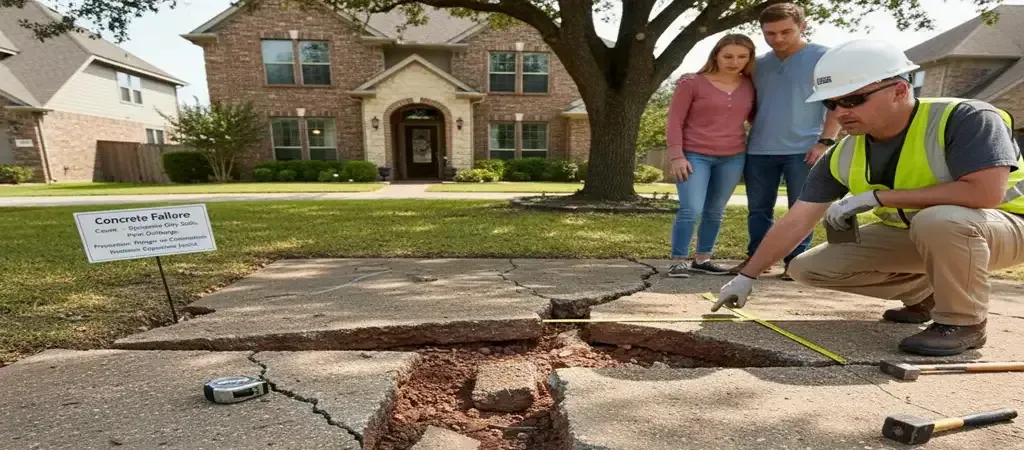
Slab design that performs well in stable soil regions often struggles in North Texas. Dallas foundations must actively resist movement rather than simply tolerate it. Review common concrete slab failures in Dallas to see how they can be prevented.
How Rebar Reinforced Slabs Work
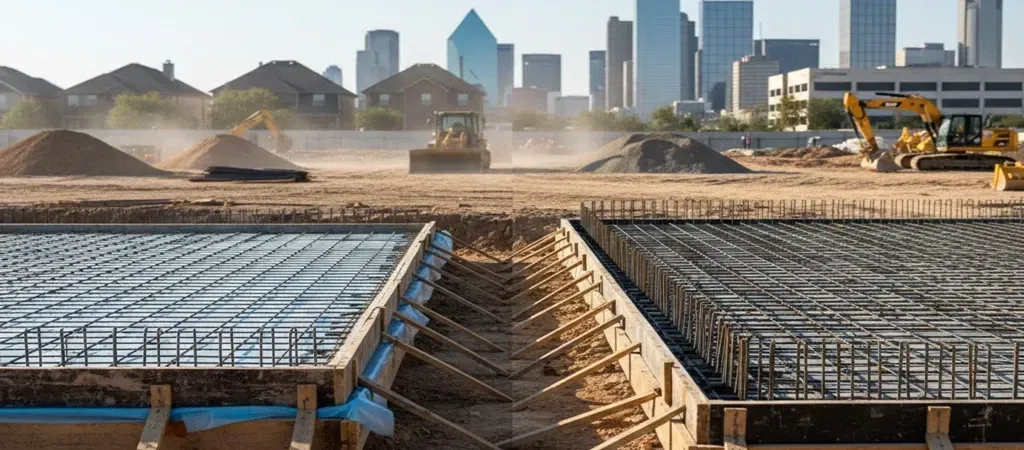
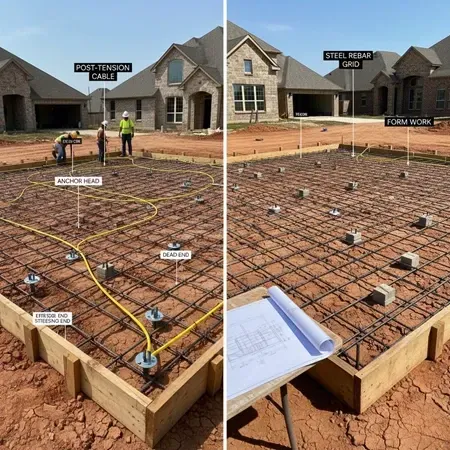
Traditional rebar-reinforced slabs rely on steel bars placed in a grid pattern within the concrete. The rebar helps control cracking by holding the slab together once cracks form.
This system has been used successfully for decades and still has valid applications. In driveways, patios, and light flatwork, rebar reinforcement performs well when soil is properly prepared.
The limitation is that rebar is passive reinforcement. It does not actively counter soil movement. Once the slab cracks, rebar helps limit separation but does not prevent the initial cracking.
In our work, we have seen rebar slabs perform acceptably on stable sites but struggle on residential foundations where moisture variation is unavoidable. Review concrete slab thickness requirements in Dallas for a clearer comparison of residential and commercial standards.
How Post-Tension Slabs Are Different
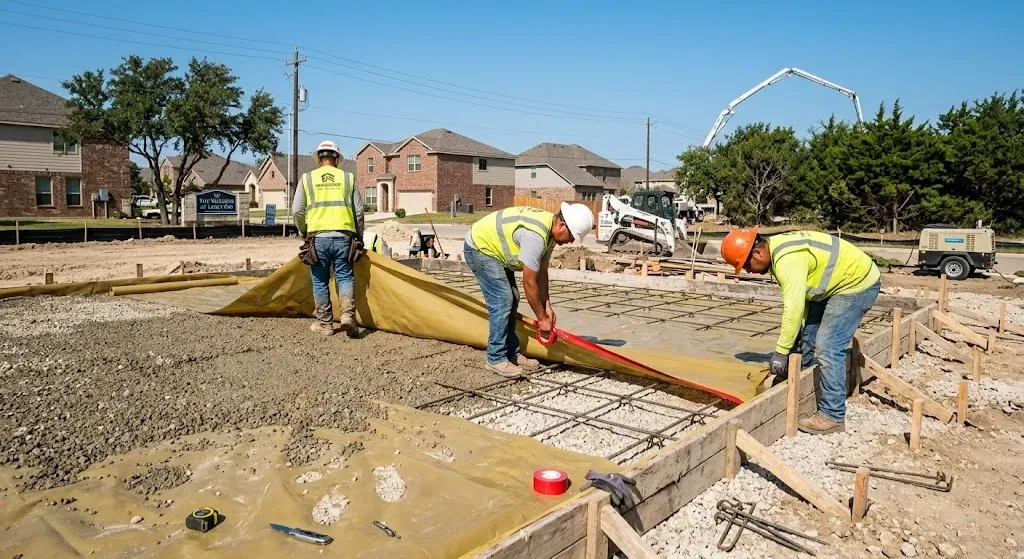
Post-tension slabs use high-strength steel cables encased in sleeves. After the concrete cures, these cables are tensioned, placing the slab under constant compression.
That compression is the key difference. Instead of reacting to movement, the slab actively resists it. When soil shifts, the slab behaves more like a single structural plate rather than a collection of connected sections.
Post-tension systems were adopted widely in Texas for a reason. They are specifically engineered to handle expansive soils.
Performance Over Time in Dallas Homes
Based on experience overseeing long-term residential projects, post-tension slabs generally show fewer structural issues over time in Dallas. Cracks still occur because all concrete cracks, but they tend to be smaller and more controlled.
Rebar slabs often develop wider cracks when soil dries out aggressively during hot summers. Those cracks can transmit movement into framing, drywall, and finishes above.

This difference matters because foundation movement is rarely a single event. It is repetitive and seasonal. Systems that manage repeated stress outperform those designed for static conditions.
Common Misconceptions Homeowners Have
One common belief is that post-tension slabs never crack. That is false. They crack less severely, but cracking is inevitable.
Another misconception is that post-tension slabs are stronger simply because they cost more. Cost is not the deciding factor. Suitability to soil conditions is.
We have also seen homeowners drill or cut into post-tension slabs without proper inspection. This is dangerous. Cutting a tensioned cable can cause serious injury and structural damage.
Tradeoffs Between the Two Systems
Post-tension slabs require more precise engineering and inspection. Repairs or modifications later require caution and professional involvement. Rebar slabs are easier to modify but less forgiving under soil movement.
Rebar reinforcement may still make sense for detached structures or areas with controlled moisture conditions. For primary residential foundations in Dallas, the tradeoff favors structural performance over convenience.
The smarter decision weighs long-term stability against short-term flexibility.

Local Building Practices and Codes
Dallas-area building codes and engineers frequently specify post-tension slabs for residential foundations due to soil conditions. The International Residential Code allows multiple foundation systems, but local soil reports and determinations based on soil characteristics often drive engineering decisions about which system to use.
In practice, most new Dallas homes use post-tension slabs because they align better with local geotechnical realities.
What Experience Shows in the Field
In our work across Dallas County, slab failures rarely come from poor concrete strength alone. They come from soil movement that the reinforcement system could not manage effectively.
Projects built with proper soil prep, moisture control, and post-tension reinforcement consistently show better performance over time. That consistency is not theoretical. It is observed across decades of use.
Final Takeaway
For Dallas homes, post-tension slabs are generally the better choice. They are engineered for expansive soil, resist seasonal movement more effectively, and reduce long-term structural issues.
The takeaway is simple but important. Foundation choice should match local soil behavior, not generic construction preferences. The next step is to review soil reports carefully and confirm reinforcement methods before construction begins.