The Role of Proper Drainage in Concrete Slab Longevity in Dallas TX
Key Takeaway:
Poor drainage is one of the leading causes of premature concrete slab failure in Dallas. When water is not properly managed at the surface, subbase, and subsurface levels, it creates conditions that accelerate cracking, settling, and structural deterioration — regardless of mix quality or reinforcement. Getting drainage right from the start is what separates slabs that last decades from those that begin failing within a few years.
Concrete is one of the most durable construction materials available, but its longevity depends heavily on conditions that have nothing to do with the concrete itself. In Dallas, where expansive clay soils, intense summer storms, and wide temperature swings are part of the local environment, drainage management is one of the most critical factors in determining how long a concrete slab performs. A well-mixed, properly reinforced slab placed on a poorly drained site will deteriorate faster than a simpler slab built on a site where water is managed correctly from the ground up.
This guide covers how drainage affects concrete slab longevity, what happens when it is handled inadequately, and what proper drainage design looks like across the different slab applications common in the Dallas area.
Why Water Is the Primary Threat to Concrete Slabs
Water affects concrete slabs through several distinct mechanisms, each of which operates on a different timeline. Understanding these mechanisms is essential context for any
concrete slab installation in Dallas, where local soil and climate conditions amplify the damage water can cause when it is not properly managed during both the design and construction phases.
Expansive Soil Movement
Dallas sits on Blackland Prairie clay, one of the most expansive soil types in North America. This clay absorbs water and swells significantly, then shrinks as it dries. When moisture levels beneath a slab fluctuate — which they do naturally through Dallas's wet springs and dry summers — the soil moves. If that movement is uneven, which it almost always is on real sites, the slab experiences differential settlement. One section rises while another drops, creating internal stress that the concrete eventually cannot absorb without cracking.
Hydrostatic Pressure
When water accumulates beneath or around a slab and has no clear path to drain, it builds pressure against the underside of the concrete. This hydrostatic pressure is a persistent upward force that causes lifting, joint displacement, and in severe cases, surface heave. It is most common in areas with poor subbase permeability, high water table zones, or sites where surface grading directs water toward rather than away from the slab.
Erosion of the Subbase
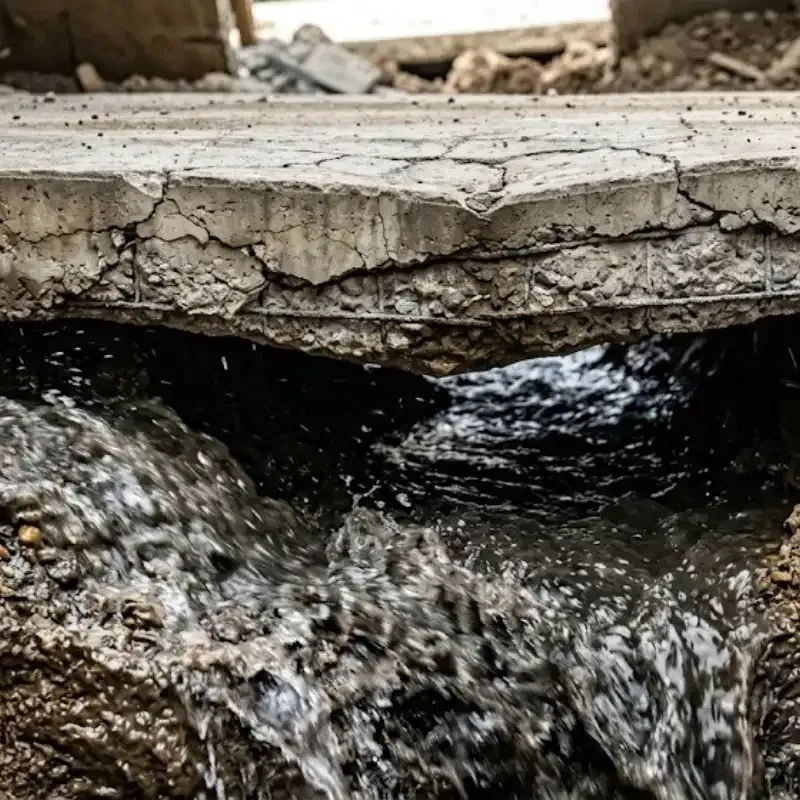
Water moving beneath a slab at velocity carries soil particles with it. Over time, this erosion removes material from the subbase, creating voids that the slab then spans unsupported. When load is applied — vehicles, equipment, or simply the weight of the concrete itself — the unsupported section flexes and eventually cracks. This type of failure often appears suddenly but has been developing gradually for years through undetected subsurface erosion.
Surface Drainage: The First Line of Defense
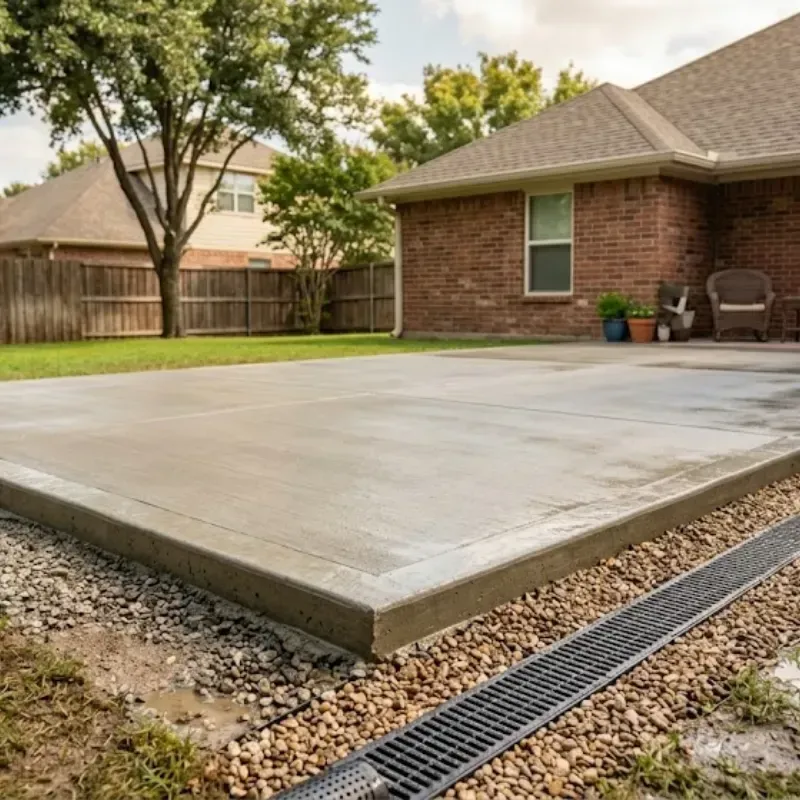
Surface drainage is the most visible component of a drainage system and the one most directly within the control of the design and installation team. Its purpose is to move water off the slab and away from the structure quickly enough that it does not pond, infiltrate joints, or saturate the surrounding soil near the slab edge.
Slope and Grade Requirements
A minimum slope of one to two percent is the accepted standard for most residential and commercial concrete flatwork. On slabs where vehicles operate, a steeper slope may be appropriate to prevent standing water in wheel paths. The challenge in Dallas is that many residential lots are relatively flat, which means achieving adequate slope requires intentional grading rather than relying on natural topography. When this grading is skipped or approximated, water pools at low points and works its way into the slab system through joints and edges.
Joint Design and Sealing
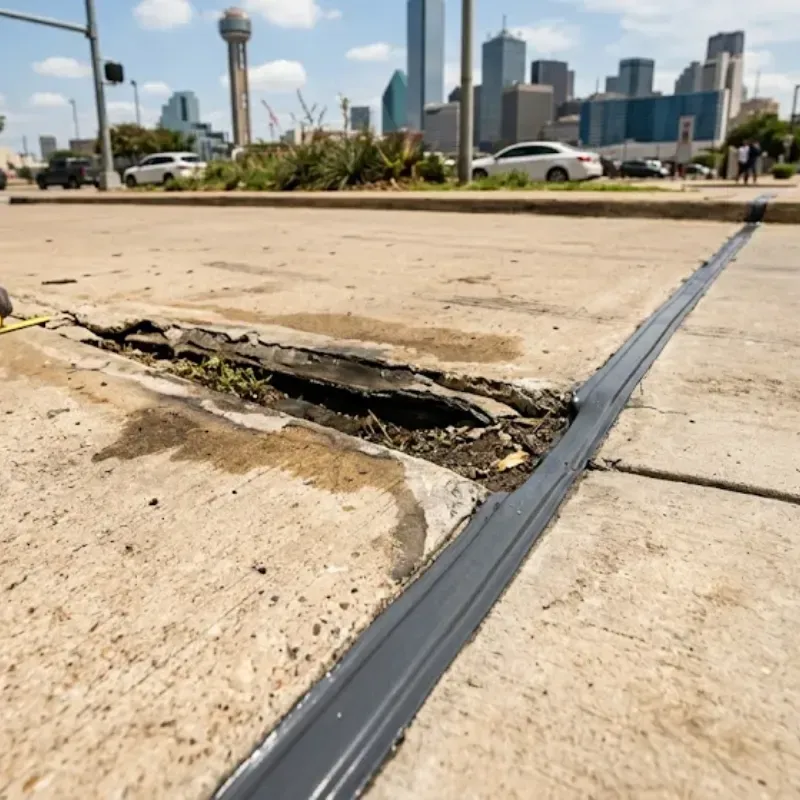
Control joints and expansion joints are not only structural features — they are also potential water entry points. Properly sealed joints prevent surface water from migrating into the subbase. Over time, joint sealants degrade and must be maintained. In Dallas's climate, where UV exposure is intense and temperature cycling is significant, sealant lifespans are shorter than in milder regions. Maintaining joint seals is one of the most cost-effective ways to extend the service life of an existing slab.
Subsurface Drainage: Managing What You Cannot See
Surface drainage addresses water that falls on or near the slab. Subsurface drainage addresses groundwater, infiltration from adjacent soil, and water that bypasses surface systems during heavy rain events. In Dallas, where rainfall can be intense and the underlying clay limits natural percolation, subsurface drainage is frequently the difference between a slab that holds up and one that begins failing silently.
Subsurface drainage infrastructure — perforated pipe systems, aggregate drainage layers, and French drains — must be designed based on the specific site's soil permeability, water table behavior, and surrounding grading.Dallas Concrete Contractors incorporate subsurface drainage planning as a standard part of project design rather than an afterthought, because the cost of installing drainage infrastructure during construction is a fraction of what remediation costs once a slab has begun to fail.
Subbase Material Selection
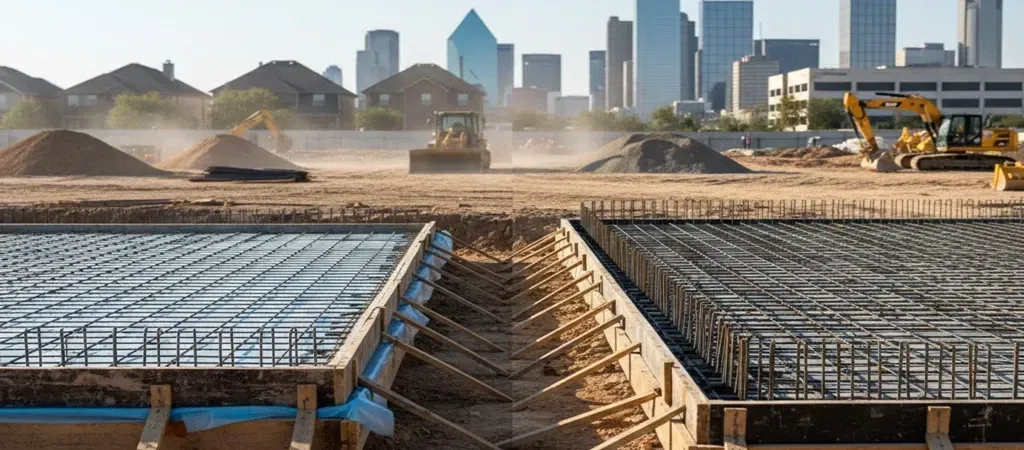
The subbase layer between native soil and the concrete slab serves a drainage function in addition to its structural role. Crushed limestone and compacted caliche are commonly used in North Texas because they provide a stable, relatively permeable platform that allows water to move laterally rather than accumulating beneath the slab.
Subbase depth, compaction level, and material gradation all influence how effectively this layer manages water under realistic storm conditions.
How Poor Drainage Leads to Slab Failure
The failure modes that drainage problems produce are not always dramatic. More often, they develop slowly and become visible only after the damage is already structurally significant.
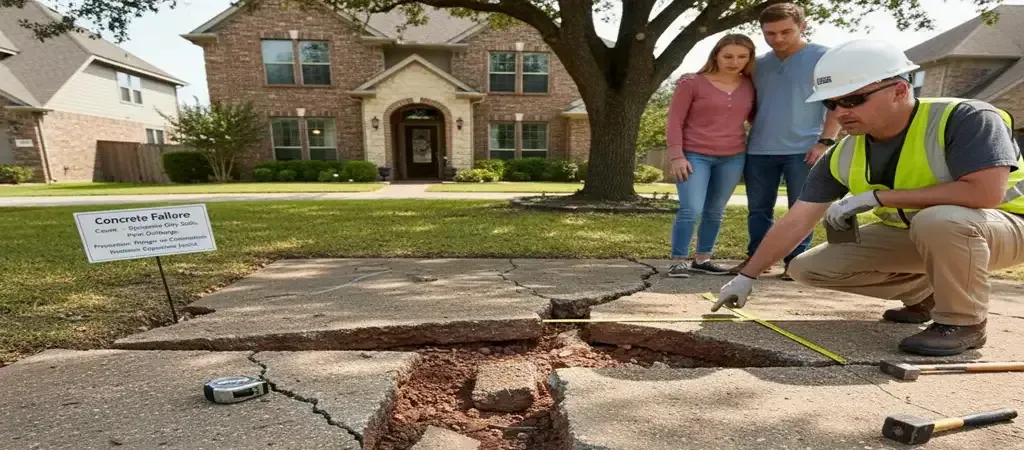
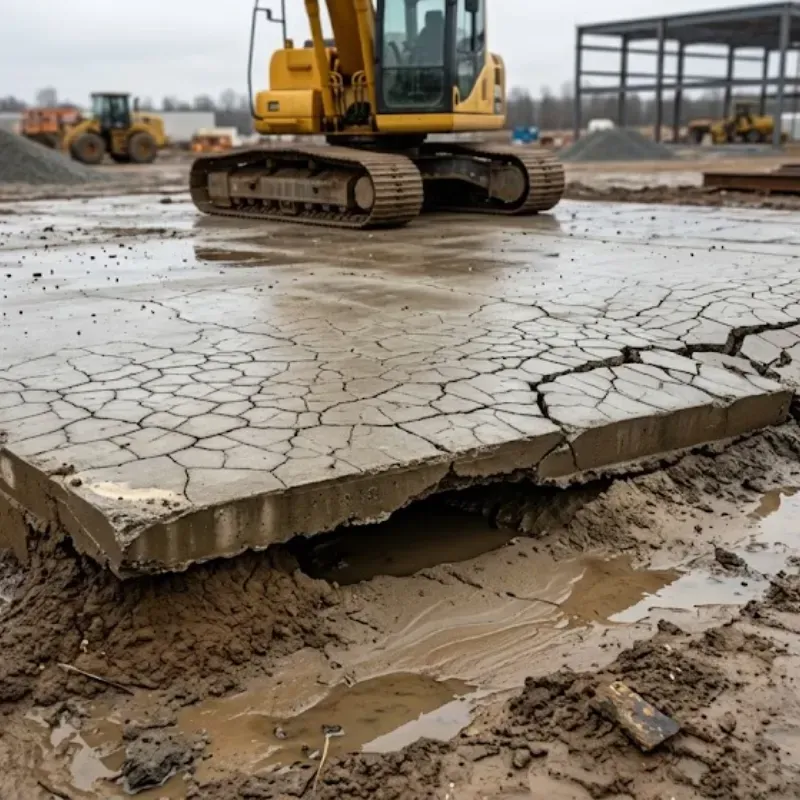
Surface cracking from differential settlement typically appears as a network of fine cracks that widen over time as soil movement continues.
Edge failures occur when water repeatedly saturates soil at the slab perimeter, softening the subbase and allowing the edge to sink. Interior void formation is invisible until a loaded section suddenly deflects or cracks under weight that it previously handled without issue.
Understanding the full range of ways water compromises slabs is important for both prevention and diagnosis. A detailed look atcommon slab failures caused by poor drainage shows how each failure type connects to a specific drainage deficiency — and why addressing the drainage condition, not just the surface symptom, is what determines whether repairs hold long-term.
Drainage and Reinforcement Work Together
Drainage design and structural reinforcement are separate disciplines, but they are not independent variables in slab performance. A slab with excellent drainage can tolerate a more standard reinforcement specification because the soil beneath it remains stable and predictable. A slab with poor drainage requires more aggressive reinforcement to compensate for the soil movement that inadequate drainage allows — and even then, the reinforcement is managing a problem rather than preventing it.
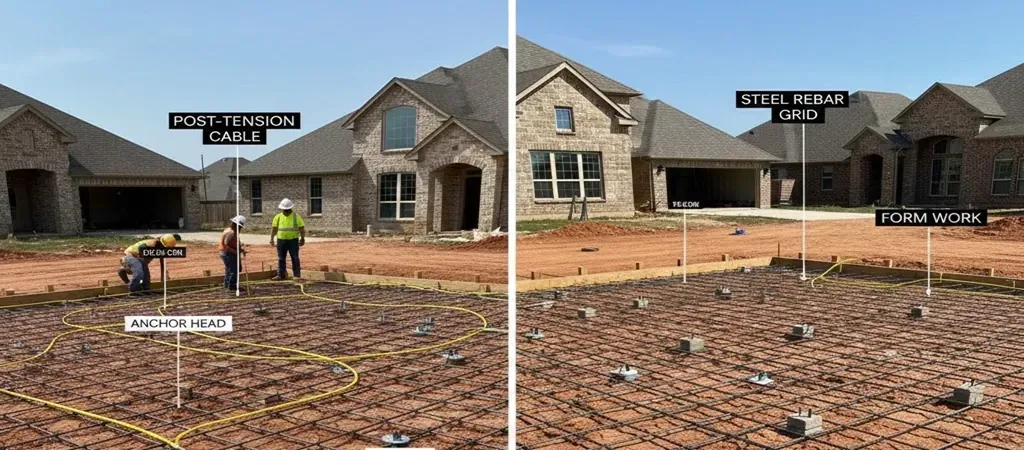
This relationship between drainage quality and structural demand is one reason why reinforcement decisions for Dallas slabs should always be made with drainage conditions as part of the analysis. A post-tensioned slab, for example, performs very differently on a well-drained site versus one where subsurface moisture creates persistent upward pressure against the tendon anchors.
Drainage Standards and Why They Matter in Practice
Drainage requirements for concrete flatwork are governed by a combination of local building codes, engineering standards, and site-specific conditions. In the Dallas area, the City of Dallas Stormwater Management standards set minimum requirements for impervious surface drainage on new construction, including slope minimums and requirements for directing runoff away from adjacent structures and property lines.
FEMA drainage and flood management guidelines provide additional reference frameworks for managing stormwater in regions with significant flood risk — a relevant consideration in parts of the DFW metroplex where floodplain designations directly affect what drainage infrastructure is required before and during concrete construction. Understanding these standards helps homeowners and contractors align project design with both regulatory requirements and long-term performance expectations.
Beyond compliance, these standards reflect empirical data on what drainage conditions actually protect concrete infrastructure over time. Meeting the minimum is a starting point; designing to exceed it in challenging soil conditions is what produces slabs that reach their full expected service life.
Drainage First, Then Everything Else
In Dallas, no concrete slab specification is complete without a drainage plan that addresses surface slope, joint sealing, subbase permeability, and subsurface water management. The local soil conditions make water the primary adversary of long-term slab performance, and no amount of mix quality or reinforcement fully compensates for a drainage design that allows water to accumulate where it can do damage.
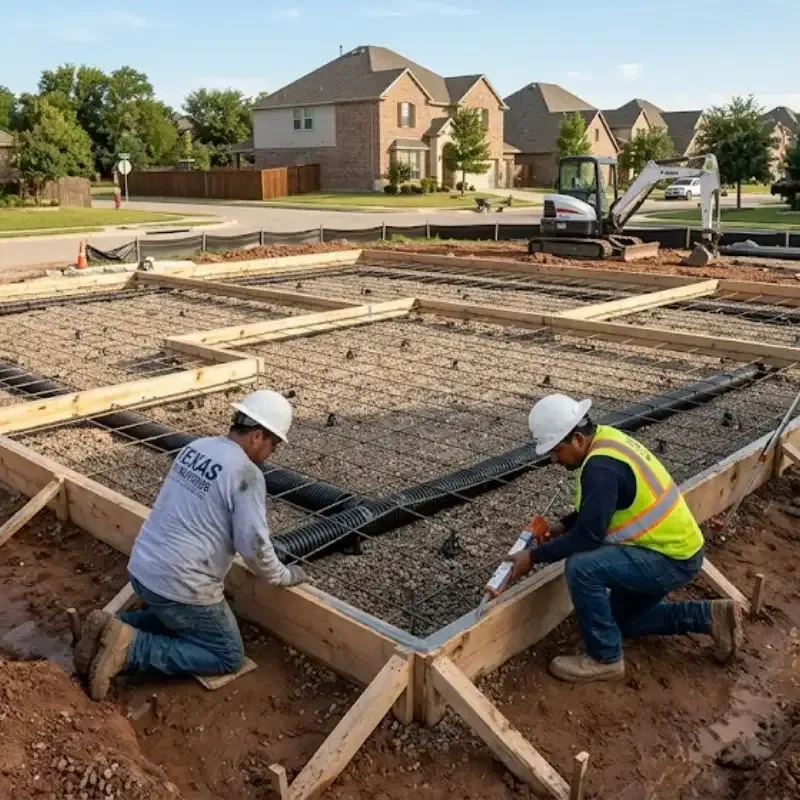
The most durable slabs in the Dallas area share a common characteristic: drainage was treated as a design priority from the beginning of the project, not as an afterthought addressed during finishing or landscaping. That sequence — drainage design first, then structural specification, then surface finish — is what consistently produces concrete that performs well through years of Dallas weather and soil movement.
For homeowners and property managers evaluating an upcoming concrete project, asking directly how drainage will be managed at the surface, subbase, and subsurface levels is one of the clearest indicators of whether a contractor's approach will produce results that hold up over the long term.