Repair vs. Replacement: How to Diagnose Concrete Foundation Damage in Dallas Homes
Decision Snapshot:
In Dallas homes, deciding whether to repair or replace a concrete foundation system depends on whether the house still has reliable structural support beneath expansive clay soils. Isolated cracking may still be repairable, but widespread movement, elevation shifts, or unstable subgrade conditions usually make replacement or major structural rebuilding the smarter long-term solution.
In Dallas homes, foundation damage is rarely just a surface crack. Between North Texas clay movement, drainage swings, and long summer heat cycles, early warning signs can quickly escalate into structural failure, which is why many property owners who first look into concrete foundation services in Dallas are often dealing with support issues far below the visible concrete surface.
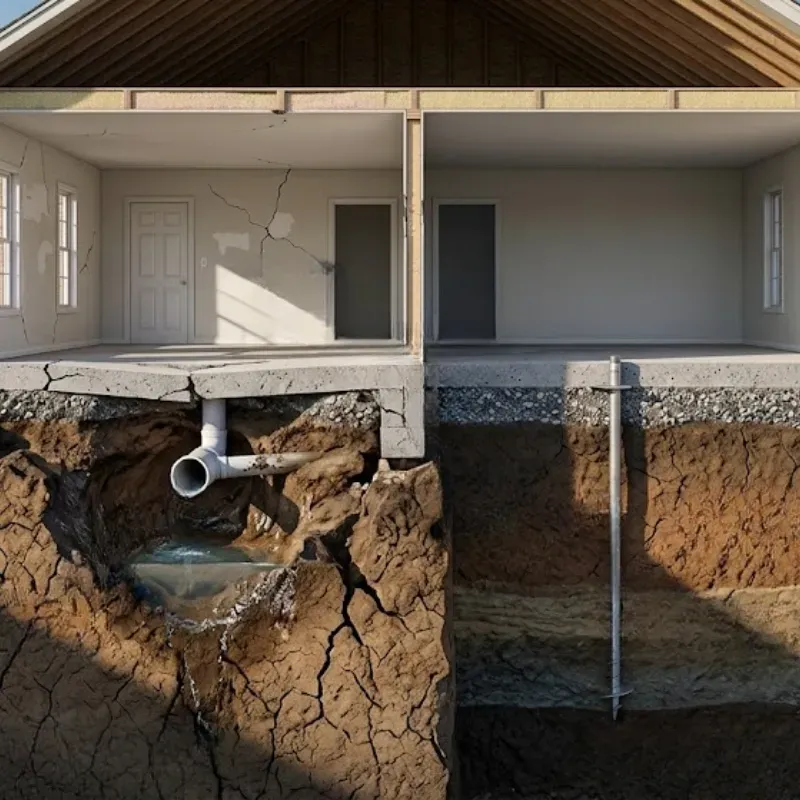
Most homeowners make the wrong call by reacting to what they can see instead of what caused it. A visible crack is only the symptom. The real decision is whether the home still has structural support beneath Dallas’s expansive clay conditions or whether the support system below the slab-on-grade foundation has already failed. Across the Dallas-Fort Worth Metroplex, many cosmetic cracks get patched multiple times when the real issue is subgrade movement, trapped moisture, erosion, or plumbing-related soil loss beneath the house.
Start With the Crack Pattern, Not the Surface Appearance
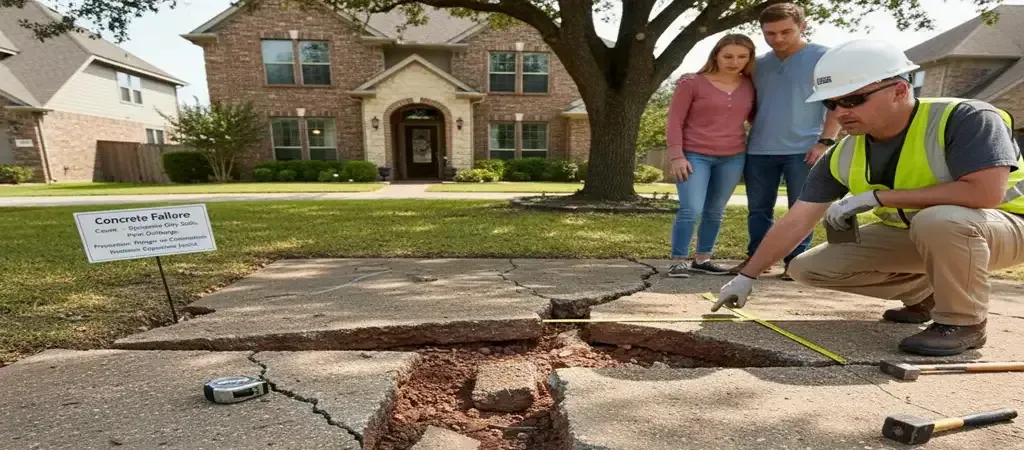
Hairline shrinkage cracks can still be common and sometimes remain repairable. These often develop from curing stress, minor settlement, or normal aging and, by themselves, rarely justify full foundation replacement. The real concern begins when cracks widen, spread in multiple directions, or show signs of vertical separation.
Once one side of the foundation sits even slightly higher than the other, the issue moves beyond cosmetic deterioration and into structural movement.
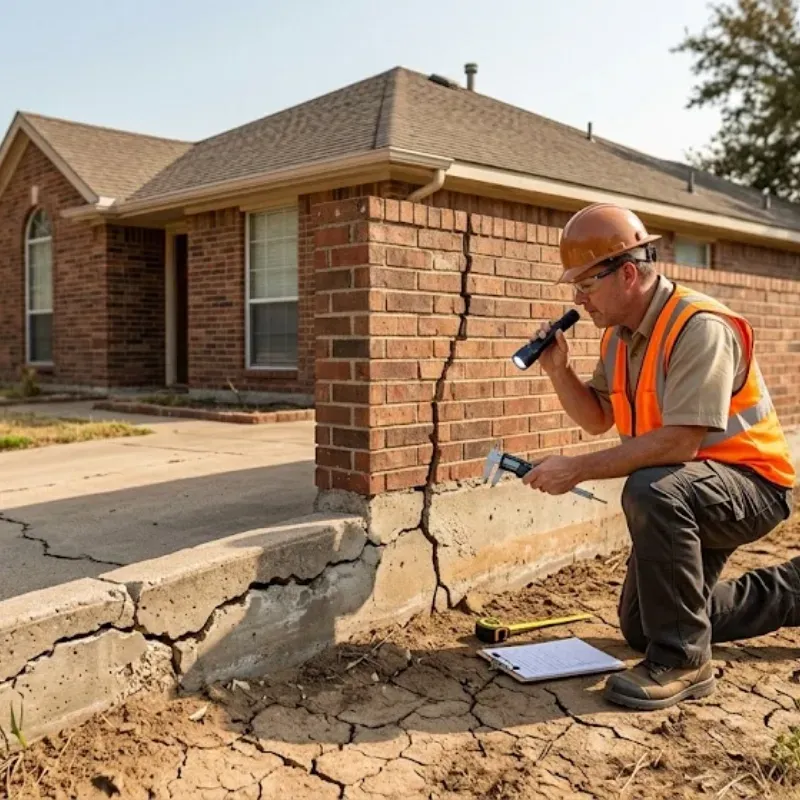
Dallas homes face this more than many other regions because expansive clay soils swell after rain and contract aggressively during drought. Over time, that repeated soil movement creates differential settlement that places constant pressure on slab-on-grade foundations, making crack patterns far more meaningful than appearance alone.
The Repair Threshold Most Homeowners Misjudge
Our experienced foundation specialists distinguish between damage that is still repairable and damage that is already signaling system failure.
A foundation may remain a strong repair candidate when cracking is isolated, the surrounding grade remains stable, and the movement has not affected the home’s load-bearing behavior. In these cases, solutions such as crack injection, polyurethane lifting, pier stabilization, or localized structural correction can significantly extend foundation performance.
The mistake many Dallas homeowners make is assuming repeated patching automatically saves money. In reality, it often compounds long-term cost.
Recurring garage-edge cracks, sticking doors, drywall separation, and minor wall fissures often get repaired every year or two, only for the same symptoms to return because the perimeter drainage issue, plumbing leak, or soil imbalance causing movement was never corrected.
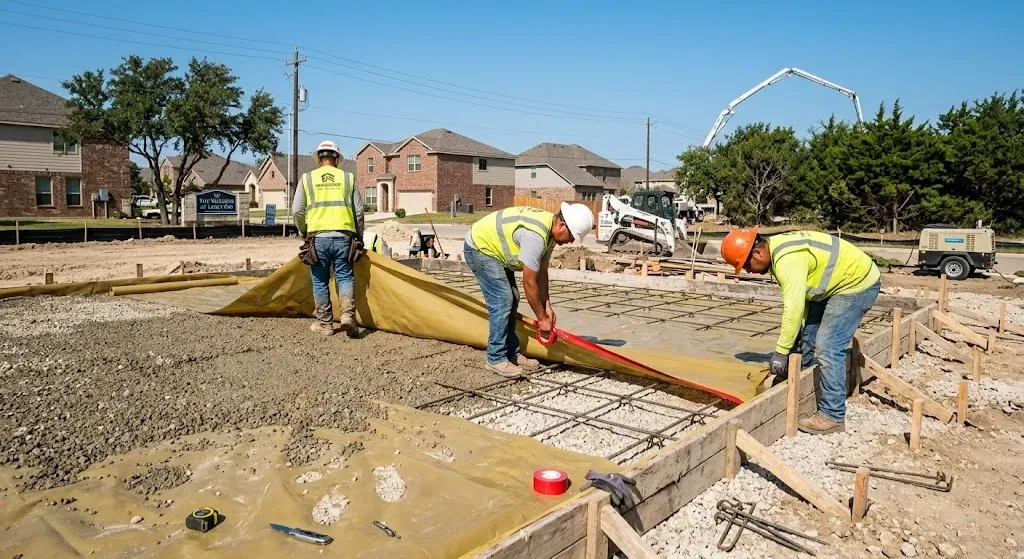
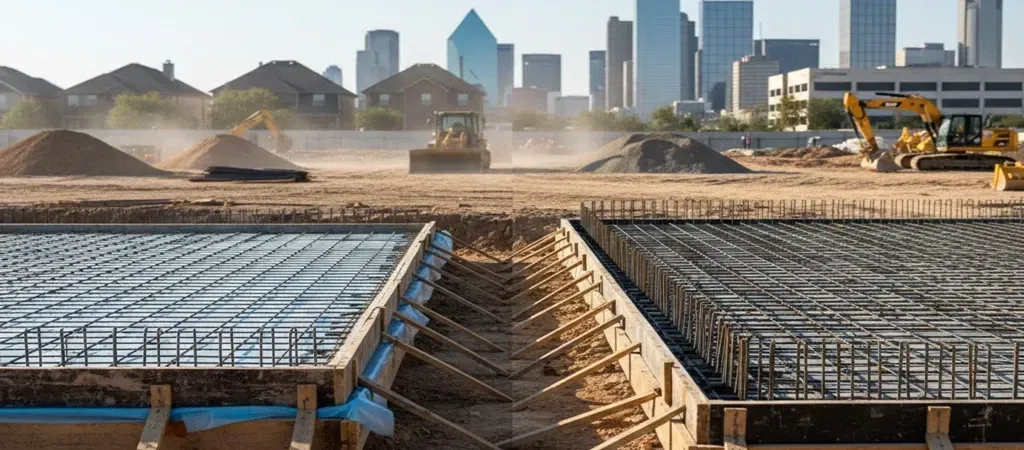
The repair may look successful, but the structural cause remains active. However, most issues like this can be avoided, especially when proper site preparation is implemented. Review proper site preparation guidelines before pouring concrete.
When Replacement Is the Smarter Structural Decision
Replacement or major rebuilding becomes the smarter choice when the foundation damage indicates the support system below the house has fundamentally changed.
This usually reveals itself through widespread crack networks, recurring settlement in multiple areas, plumbing-related voids, slab heaving, floor slope changes, or sections that continue pulling away from their original load paths. Once those conditions are present, repair materials simply inherit the same instability.
When movement-related cracking is driven by unstable support conditions, surface-level repair has a short service life unless the base condition itself is rebuilt or permanently stabilized. That logic directly applies to Dallas residential foundation systems. If moisture imbalance, failed reinforcement, poor original compaction, or active under-slab voids are still present, replacement becomes the more responsible long-term decision.
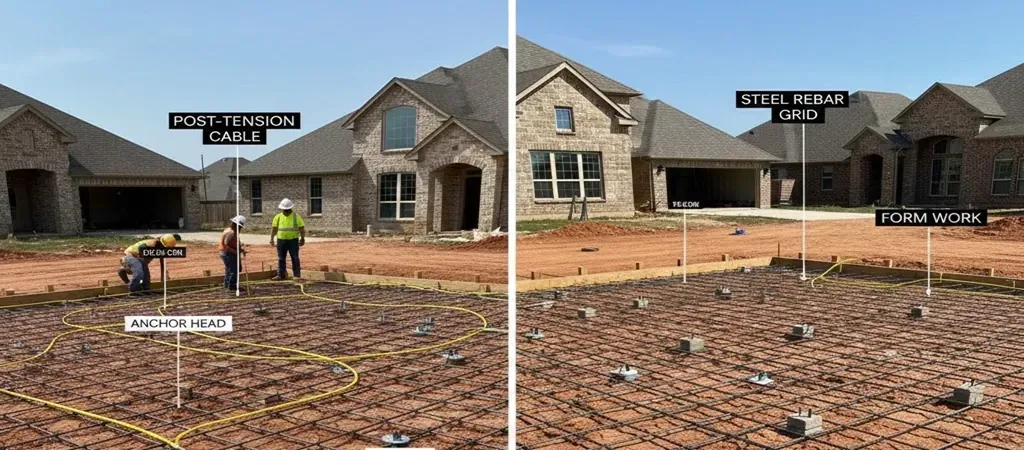
If replacement is necessary, it’s important to choose the right type of slab. Review post-tension vs. rebar reinforced slabs to see which is best for your home.
Dallas Soil Conditions Change the Diagnosis
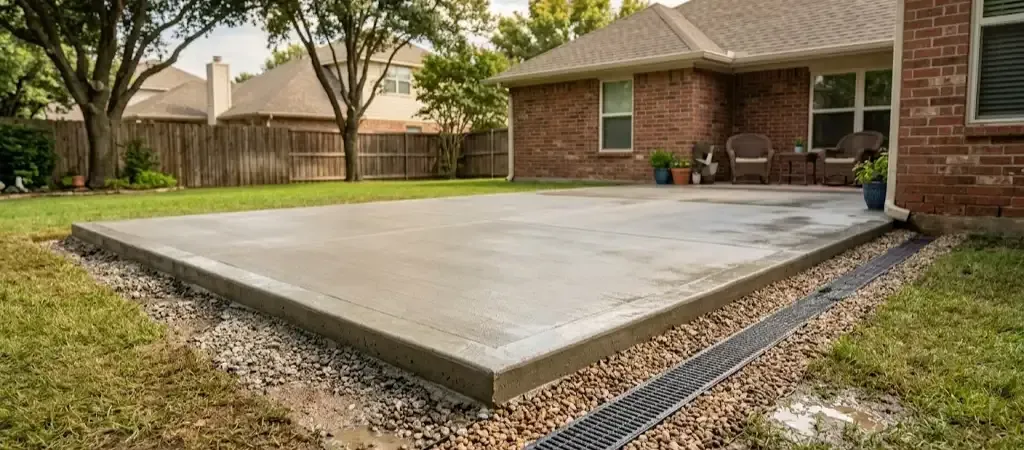
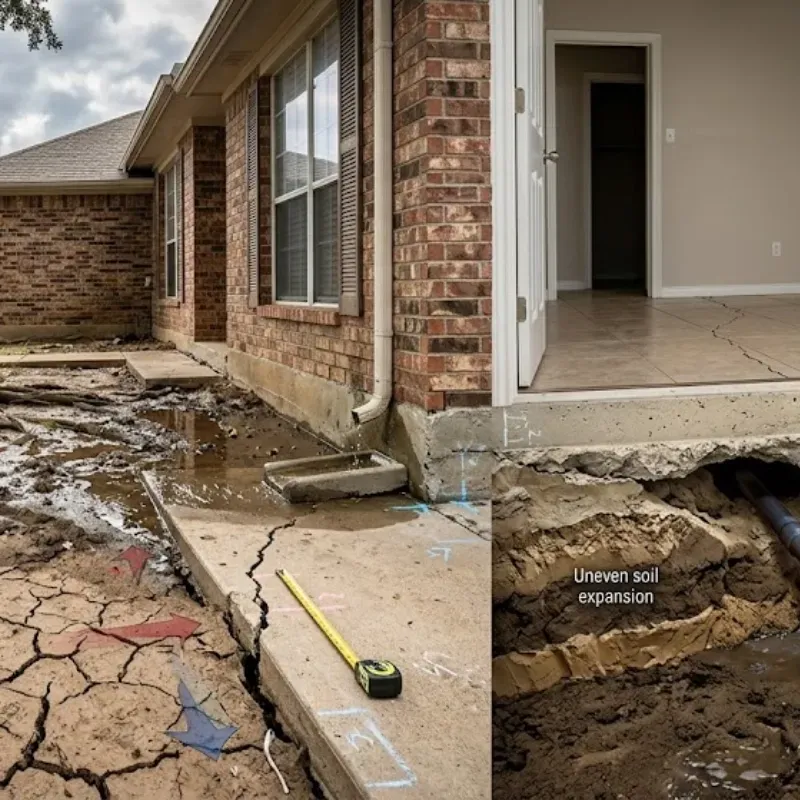
A foundation diagnosis in Dallas must account for expansive clay soils, dramatic wet-dry cycles, poor gutter discharge, tree root moisture competition, and the possibility of under-slab plumbing leaks. These local variables make the same crack pattern mean very different things depending on where it appears and what environmental pressure is influencing it.
For example, a center-floor crack may still be a manageable repair issue, while a perimeter crack near poor drainage runoff could signal edge lift, washout, or support loss beneath the footing zone. The reason the crack formed matters more than the crack itself, and that is where location-based expertise separates trustworthy advice from generic content.
The Biggest Mistake: Confusing Cosmetic Cracks With Foundation Movement
The most expensive foundation decisions usually come from misdiagnosis.
Some homeowners replace foundation sections that only needed stabilization, while others continue repairing systems that have already lost reliable support. Both choices waste money because neither addresses the true failure path.
The smarter decision comes from evaluating whether movement is still active, whether foundation elevation has changed, whether water is still destabilizing the soil, and whether the chosen repair can realistically survive Dallas’s next seasonal expansion cycle. A repair that only lasts until the next major weather shift is not truly a repair. It is a delay.
A Smarter Rule for Dallas Homeowners
The practical rule is simple: repair the foundation when the home is still structurally supported, and replace or rebuild when the support system beneath the house can no longer be trusted.
That distinction protects both budget and long-term structural reliability. Homeowners often wait too long to replace foundations showing recurring movement. Once elevation shifts, cracks reopen, or interior symptoms begin affecting walls, doors, and load transfer, the issue is no longer a surface problem. It is reflecting a compromised foundation system.
Final Takeaway
In Dallas homes, foundation damage decisions should never begin with price alone. They should begin with the cause. Expansive clay, drainage defects, plumbing-related voids, and unstable subgrade conditions make cosmetic crack repairs unreliable when the structural support system beneath the house has already been compromised.
The most confident next step is to determine whether the foundation is still fully supported. If it is, repair is often the smarter investment. If it is not, replacement or structural rebuilding is the only durable path that prevents the same failure from returning after the next Dallas wet-dry cycle.