Vapor Barriers and Moisture Control for Concrete Slabs in North Texas
Local Insight:
In North Texas, vapor barriers are essential for protecting concrete slabs from ground moisture that can damage flooring, adhesives, and long-term slab performance. When paired with proper subgrade prep, drainage, and curing discipline, they help prevent moisture-driven failures caused by expansive clay soils and sudden weather swings.
What causes a concrete slab to fail long before the concrete itself wears out? In North Texas, the answer is often hidden beneath the surface, where vapor drive, expansive clay, and trapped moisture quietly work against the slab from day one. For projects involving
commercial concrete slab services in Dallas, the real question is not whether a vapor barrier should be used, but whether the moisture control strategy is strong enough to protect flooring, adhesives, and long-term slab performance in a region known for soil movement and sudden weather swings.
Why Vapor Barriers Matter More in North Texas
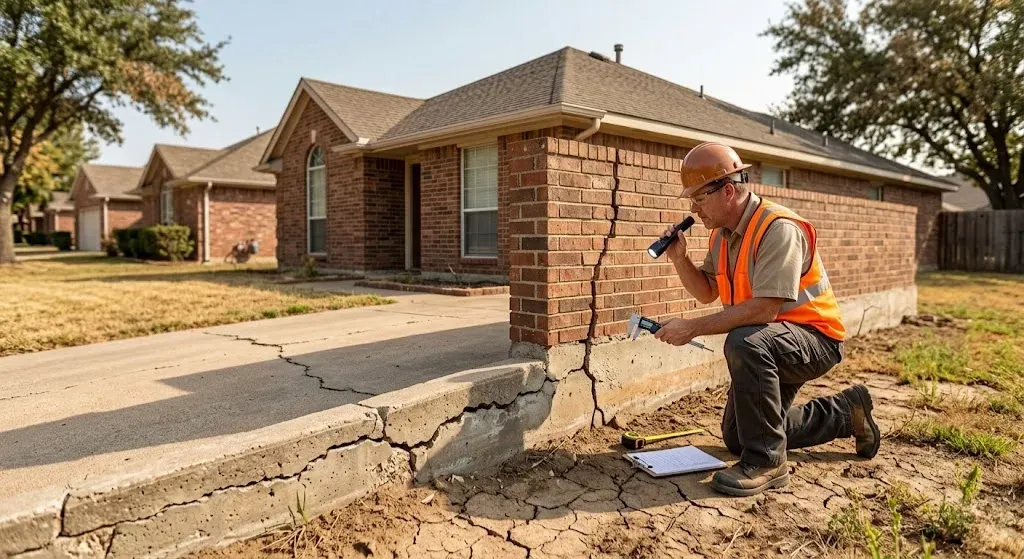
North Texas creates a perfect storm for slab moisture problems. The region’s expansive clay soils absorb water during wet periods, shrink during drought, and create constant movement pressure beneath slab-on-grade construction. This cycle makes moisture control far more than a best practice. It is a structural necessity.
In our work across the Dallas–Fort Worth Metroplex, moisture-related slab issues rarely begin with dramatic cracks.
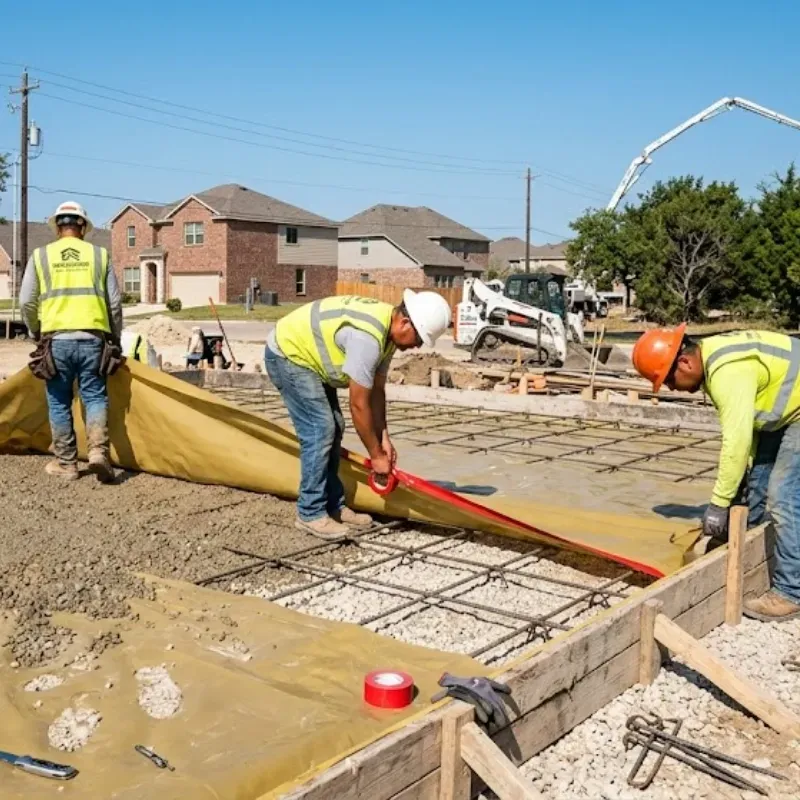
Our concrete slab experts note that they usually start as quiet warning signs: adhesive softening, flooring edges lifting, surface discoloration, or elevated pH readings months after completion. By the time those symptoms appear, the source is often traced back to poor underslab vapor protection.
That is why treating the vapor layer as just another plastic sheet is one of the most expensive mistakes a builder can make. In North Texas, the barrier is part of the slab system itself, and its role is to stop ground moisture from turning into a long-term flooring and maintenance problem.
What Our Concrete Slab Experts Look for Before the Pour
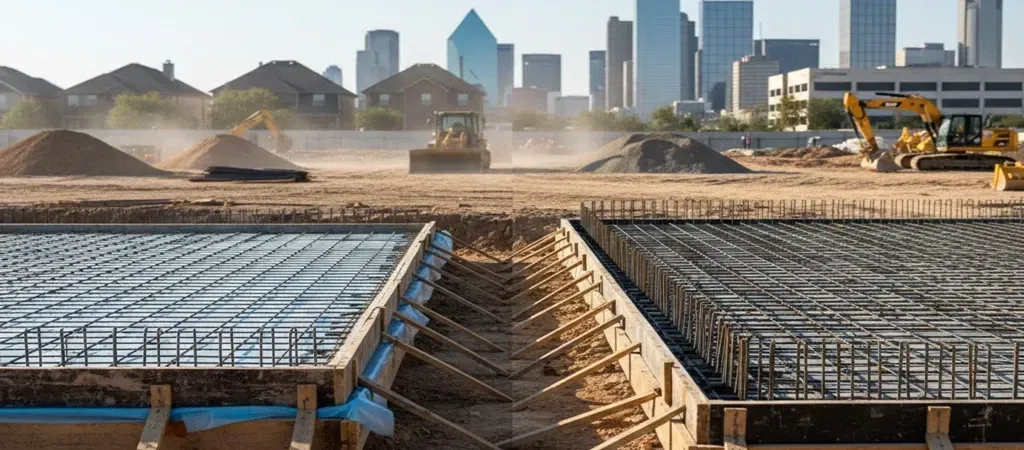
The most important moisture decisions happen before the concrete truck arrives. Our concrete slab experts begin by evaluating the subgrade, drainage path, fill compaction, and the final interior floor finish because the slab should be built around how the space will actually perform.
A polished office slab, for example, demands a far tighter moisture-control strategy than a basic storage structure. The same is true for medical offices, retail interiors, and climate-controlled warehouses where flooring adhesives and coatings are highly sensitive to residual slab moisture.
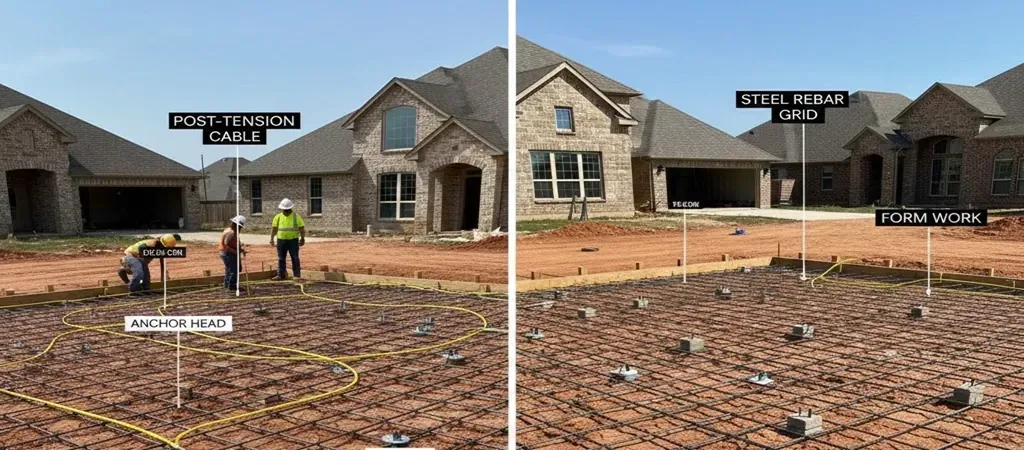
This is where experienced slab planning matters. Seam overlap, penetration sealing around plumbing, perimeter drainage, and curing schedules all influence whether the vapor retarder performs as intended. We have seen projects where a well-specified barrier was undermined simply because penetrations were left loosely sealed or because site crews punctured the membrane during reinforcement placement.
The smarter approach is to evaluate the entire slab assembly, including the drying timeline after placement. In North Texas, where HVAC systems can create strong interior vapor differentials, the slab’s drying behavior matters just as much as the barrier itself.
Slab thickness directly impacts both moisture storage capacity and drying rate. Accordingly, reviewing concrete slab thickness requirements is necessary to ensure proper long-term performance.
The Real Tradeoff: Curling Risk vs Moisture Failure
This is where real contractor judgment separates reliable slab performance from costly callbacks.
Yes, vapor barriers can increase the chance of slab curling because moisture escapes upward during curing instead of dissipating into the soil. That concern is legitimate, especially on large commercial pours where finishing schedules are aggressive.
But the more expensive risk in North Texas is usually moisture failure above the slab, not minor curling that can be managed through mix design and finishing discipline.
We have seen teams reduce vapor protection out of fear of curling, only to deal with flooring bubbles, adhesive breakdown, and delayed tenant turnover months later. The lesson is consistent: the solution is not weakening the moisture barrier. The solution is improving the slab system around it through tighter water-cement ratio control, correct reinforcement placement, timely saw cuts, and realistic flooring installation schedules.
When those elements are handled correctly, the slab can manage curing stresses without sacrificing long-term moisture performance.
Common Moisture Control Mistakes Dallas Builders Still Make
Most slab moisture failures in Dallas come from preventable sequencing issues rather than defective materials.
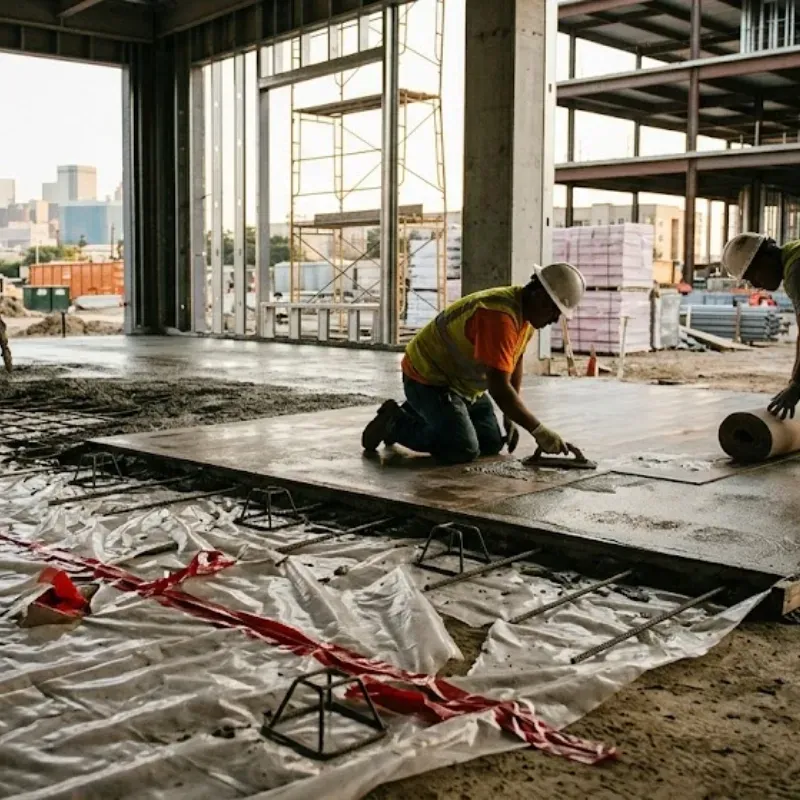
One of the most common mistakes is using a thin, low-grade vapor retarder that tears under foot traffic, rebar chairs, or equipment movement. Even small punctures can become continuous moisture pathways beneath a conditioned commercial floor.
Another issue is poor seam integrity. A high-quality membrane loses its value quickly if overlaps are inconsistent or tape fails around transitions and penetrations. Moisture always finds the weakest detail.
Early flooring installation is another recurring problem. Commercial timelines often pressure teams to move interior trades forward before slab moisture levels stabilize. In our field observations, this is one of the leading causes of coating failure, bubbling vinyl systems, and adhesive release in North Texas retail and office projects.
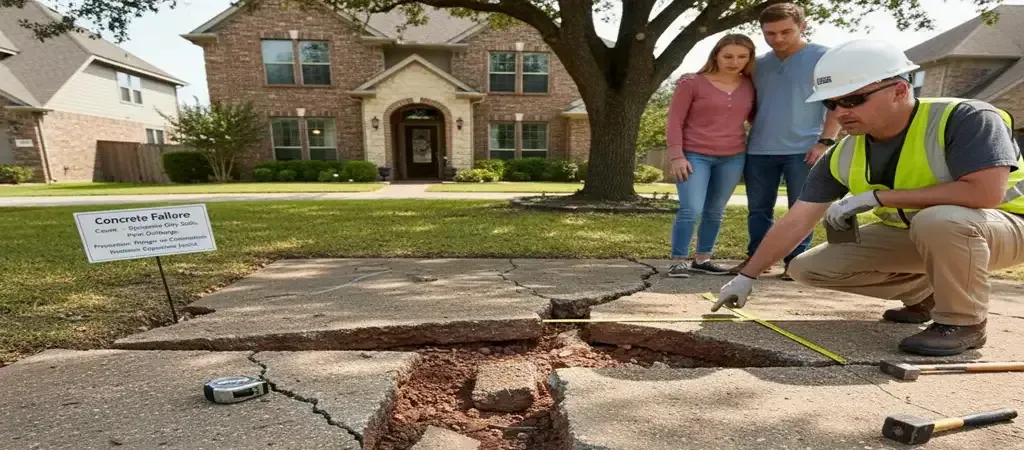
The common thread in all of these mistakes is rushing the process. Understanding how that leads to common concrete slab failures in Dallas helps illustrate why proper curing cannot be overlooked.
Why North Texas Slab Advice Must Be Location-Specific
Generic slab advice does not work well in Dallas because North Texas soil and weather conditions are unusually demanding.
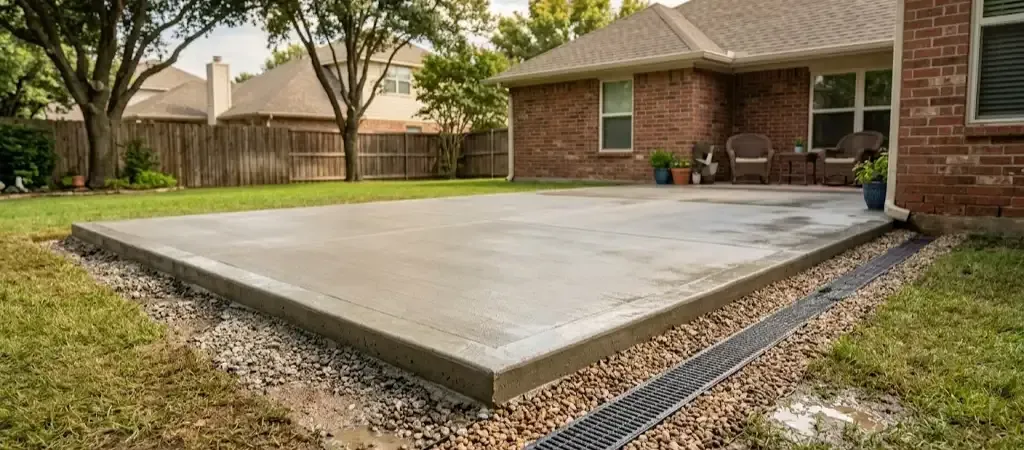
The combination of expansive clay, intense summer heat, sudden storms, and aggressive indoor cooling loads creates repeated moisture cycling beneath commercial slabs. Irrigation overspray, poor landscape drainage, and slab-edge saturation only make the problem worse.
That local reality changes how vapor barriers should be selected, installed, and protected during construction. A detail that performs adequately in a dry, stable-soil market may underperform quickly in Dallas County.
This is why local slab guidance should come from contractors who have seen these failures happen in the field, not from generic national advice alone.
Final Takeaway for Smarter Slab Performance
For North Texas slabs, vapor barriers should be treated as baseline performance protection, not an upgrade.
The most reliable outcome comes from combining a high-quality underslab barrier with strong subgrade prep, drainage planning, disciplined curing, and moisture testing before finishes are installed. The upfront attention required is minor compared to the cost of post-installation flooring failures.
The best next step is to evaluate the slab based on the final floor system, Dallas soil movement, and realistic moisture exposure before the pour begins. That is what gives owners confidence that the slab will continue performing long after the concrete hardens.